It’s very exciting to have J.J. aboard leading the charge as we set off to make a new Star Wars movie,” said Lucasfilm president Kathleen Kennedy in a press release Jan. 25. “J.J. is the perfect director to helm this. Beyond having such great instincts as a filmmaker, he has an intuitive understanding of this franchise. He understands the essence of the Star Wars experience, and will bring that talent to create an unforgettable motion picture.”
Star Wars creator George Lucas also gave his blessing to the selection of Abrams. “I’ve consistently been impressed with J.J. as a filmmaker and storyteller,” said Lucas. “He’s an ideal choice to direct the new Star Wars film and the legacy couldn’t be in better hands.
“I do things differently, because I don’t go by a rule book, because I lead from the heart, not the head, and albeit that’s got me into trouble in my work, I understand that. But someone’s got to go out there, love people and show it.
She would have been 70 years old today, January 19th, 2013.
Janis Lyn Joplin, Performer Artisan, (January 19, 1943 – October 4, 1970) was an American singer-songwriter. Joplin first rose to prominence in the late 1960s as the lead singer of the psychedelic-acid rock band Big Brother and the Holding Company, and later as a solo artist with her more soulful and bluesy backing groups, The Kozmic Blues Band and The Full Tilt Boogie Band. She was one of the more popular acts at the Monterey Pop Festival and later became one of the major attractions to the Woodstock festival and the Festival Express train tour. Janis Joplin charted five singles, and other popular songs from her four-year career include “Down on Me”, “Summertime”, “Piece of My Heart“, “Ball ‘n’ Chain”, “Maybe”, “To Love Somebody”, “Kozmic Blues”, “Work Me, Lord”, “Cry Baby”, “Mercedes Benz”, and her only number one hit, “Me and Bobby McGee”. Joplin was well known for her performing abilities, and her fans referred to her stage presence as “electric”. At the height of her career, she was known as “The Queen of Rock and Roll” as well as “The Queen of Psychedelic Soul,” and became known as Pearl amongst her friends. She was also a painter, dancer and music arranger. Rolling Stone magazine ranked Joplin number 46 on its list of the 100 Greatest Artists of All Time in 2004, and number 28 on its 2008 list of 100 Greatest Singers of All Time. She was inducted into the Rock and Roll Hall of Fame in 1995. [Wikipedia, revised]
Like A Candle in the Wind, but burning at both ends, Janis Joplin died at the age of 27, from a drug overdose.
Performers also like to live in the fast lane, and seem up on the latest fashions of dress, food, drink, and music. Lively and uninhibited, Performers are the life of the party, always trying to create in those around them a mood of eat, drink, and be merry.
The Performers’ talent for enjoying life is healthy for the most part, though it also makes them more subject to temptations than the other types. Pleasure seems to be an end in itself for them, and variety is the spice of life. And so Performers are open to trying almost anything that promises them a good time, not always giving enough thought to the consequences. [Please Understand Me II]
She died young — to be forever young.
“I’m a victim of my own insides. There was a time when I wanted to know everything. I read a lot. I guess you’d say I was pretty intellectual. It’s odd, I can’t remember when it changed. It used to make me very unhappy, all that feeling. I just didn’t know what to do with it. But now I’ve learned how to make feeling work for me. I’m full of emotion and I want a release, and if you’re on stage and if it’s really working and you’ve got the audience with you, it’s a oneness you feel. I’m into me, plus they’re into me, and everything comes together. You’re full of it. I don’t know, I just want to feel as much as I can, it’s what ‘soul’ is all about.”
“Don’t compromise yourself. It’s all you’ve got.”
Freedom just another word for nothing left to lose. — Janis Joplin (Me and Bobby Magee)
If a man does not keep pace with his companions, perhaps it is because he hears a different drummer. Let him step to the music which he hears, however measured or far away. — Henry David Thoreau
Hope can be very foolish. Parents can have hopes for their children, often these aren’t what the children can meet.
Gene Krupa, Performer Artisan, was born in Chicago, the youngest of Anna (Oslowski) and Bartłomiej Krupa’s nine children. Krupa’s father, Bartłomiej, was an immigrant from Poland, and his mother, Anna, was born in Shamokin, Pennsylvania, of Polish descent. His parents were very religious and had groomed Gene for the priesthood. He spent his grammar school days at various parochial schools and upon graduation, attended St Joseph’s College for a year, but later decided it was not his vocation. [Wikipedia, revised]
No, his parents had great plans for him, but Gene had a different drum to drum.
IT WAS THE DRUMS.
Performers have the special ability, even among the Artisans, to delight those around them with their warmth, their good humor, and with their often extraordinary skills in music, comedy, and drama. Whether on the job, with friends, or with their families, Performers are exciting and full of fun, and their great social interest lies in stimulating those around them to take a break from work and worry, to lighten up and enjoy life. [Please Understand Me II]
When I speak of natural drummers I’m talking about guys that are playing with the talent God gave ’em. — Gene Krupa
“You never really understand a person until you consider things from his point of view – until you climb into his skin and walk around in it.” spoken by Atticus Finch, in To Kill a Mockingbird, by Harper Lee.
Reverence for Life
How do you “truly” climb into another’s skin and walk around? It is a hard thing to do, well. For that person may be a different kind of person from you, from a different time, and from a different place.
One can try to “climb into another’s skin” through watching a movie or play, or reading a book. This is something we can do as humans. We can visit different lands and different tribes – the modern words for “lands” and “tribes” is countries and cultures. We can also visit some different “ages” – through movies and living in cultures that are different than your “culture” – although there are limitations and there is a possibility to not really get the “gestalt” of that age and place. Are you just a tourist or just an anthropologist?
Here are some autobiographies of the various Temperaments, many from a different time and different place. Climb into the person’s skin, and walk around in it – at least for awhile.
She had to be observant. Some of the guys could be really nasty. She might get run over, figuratively, the tires were big, but more importantly the company was big, and it paid the highest wages around — well, at least it appeared so on the surface. With a closer inspection …
She was doing her job, and as she saw it, her duty. And she worked hard at her job, was super dependable, and did a good job. It was a hard job. But, she figured, at least, it wasn’t picking cotton — she had done enough of that when she was young. She had been working hard ever since she could remember. Her production numbers were good, and her waste numbers were low.
She was thankful for that. She loved her work. She was proud of it. She was loyal. She stayed, stood her ground, and made a difference… despite the pot shots sent her way. Continue reading Making A Difference→
“There is no greater insight into the future than recognizing…when we save our children, we save ourselves”― Margaret Mead
Pushpa Basnet, Protector Guardian, started her career at the age of 21, while she was still an undergraduate in Social Work. As part of her college assignment, she visited the women prison in Kathmandu. She was dismayed at seeing the conditions of children living with their parents behind the bars. She raised 70,000 rupees (roughly $885) from her close friends and sister, and started a non-profit organization — The Early Childhood Development Center (ECDC) to provide a day care program to the children, in 2005.
In 2007, she opened a residential home for kids to live outside of prison year round while still visiting their mothers on holidays. Today, she has assisted more than 100 children of incarcerated parents. She runs a day care center for the prison children and a residential home for older ones. She has also helped to provide alternative residence, school enrollment, free meals and medical care to them. [Wikipedia, revised]
A kind of Mother Teresa of Nepal, Pushpa Basnet is providing a safe place for children to grow up.
Wanting to be of service to others, Protectors find great satisfaction in assisting the downtrodden, and can deal with disability and neediness in others better than any other type. We are lucky that Protectors make up as much as ten percent the population, because their primary interest is in the safety and security of those they care about – their family, their circle of friends, their students, their patients, their boss, their fellow-workers, or their employees. Protectors have an extraordinary sense of loyalty and responsibility in their makeup, and seem fulfilled in the degree they can shield others from the dirt and dangers of the world. [Please Understand Me II]
She won the 2012 CNN Hero of the Year Award and but represents the numerous unsung Protector Guardians that serve their fellow man without any recognition.
“…that we ought not to die before we have explained ourselves to each other…”
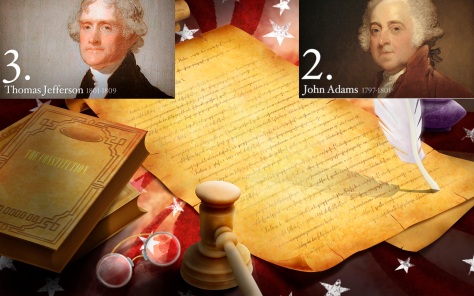
Thomas Jefferson and John Adams wrote these words in letters to each other, after both had retired from public life. Each was a founding father of the United States of America and each served as President. Jefferson, an Architect Rational, was a Virginian, tall and lanky, and a brilliant writer, but middling speaker. He relied partly on John Adams, an arrogant Fieldmarshal Rational from Massachusetts, pudgy and cantankerous, but a brilliant bulldog of a public speaker to persuade others.
This combination of the two was a very powerful dyad. The theoretical and Engineering brilliance of an Architect and the pragmatic determination of the Coordinating Rational has been seen in other pairs such as Lincoln and Grant, Einstein and Bohr, and Ulam and Teller. In this combination, these two founders helped shape the United States from the beginning based on both their temperament and character, a unique combination of personality at a crucial time in political history.
In 1800, Thomas Jefferson defeated John Adams’ reelection bid for President of United States. It was the most acrimonious election of the country’s young history, and is considered the starting point of political parties in American politics. This was an unexpected situation given that a few years earlier, Jefferson and Adams had worked well together in the framing of the Constitution and were two people tasked by Congress to write of the Declaration of Independence.
In Washington’s two terms of office was when Adams and Jefferson parted company, their visions for America differing. They became political opponents. Adams became very bitter when Jefferson defeated him in the 1800 election. Adams retired to a Massachusetts, they didn’t communicate until Madison’s second term in 1812. Their friend Benjamin Rush wrote a letter to Adams, hoping they would reconcile. Time and retirement of both seemed to heal the wounds. Adams sent the first letter and with that they proceeded to correspond for the rest of their lives: both dying on the Fourth of July, Independence Day, 1826.
So how was it they didn’t understand each other?
“On the question, ‘What is the best provision?’, you and I differ; but we differ as rational friends, using the free exercise of our own reason, and mutually indulging it’s errors.” [emphasis added]
They were Rationals, interested in theoretical solutions to practical problems. Once the United States was on a seemingly solid basis, the two began to differ in their vision of how the government of the United States should proceed. Adams was not trustful of the republican democracy and was a Federalist — more concerned with creation and protection of wealth and strengthening the central government, whereas Jefferson was not trustful with the aristocracy in the form of Federalists and preferred a more representative and more autonomous version of the electorate, Agrarian in nature. Jefferson had supported the French revolution. He even said to Abigail Adams, John Adams’ wife, in a letter: “I like a little revolution now and then.”
Jefferson explained “our difference of opinion may in some measure be produced by a difference of character in those among whom we live.” But I think that Jefferson, the Engineer, more a libertarian in nature, had a faith in the rough and tumble of local politics. He had more of a distributed notion of democracy in the form of States rights and individual freedom. But Adams, a Coordinator, viewed the educated man and the man of inheritance as equal combatants in the balance of power between different branches of government. Realizing the common man had little or no interest, or skill to be involved with government, Adam had worried about unchecked democracy.
As Jefferson surmised:
“We acted in perfect harmony through a long and perilous contest for our liberty and independence. A constitution has been acquired which, though neither of us think perfect, yet both consider as competent to render our fellow-citizens the happiest and the securest on whom the sun has ever shone. If we do not think exactly alike as to it’s imperfections, it matters little to our country which, after devoting to it long lives of disinterested labor, we have delivered over to our successors in life, who will be able to take care of it, and of themselves.”
So both Adams and Jefferson had confidence in the American Temperament to prosper.


 Freedom just another word for nothing left to lose.
 — Janis Joplin (Me and Bobby Magee)